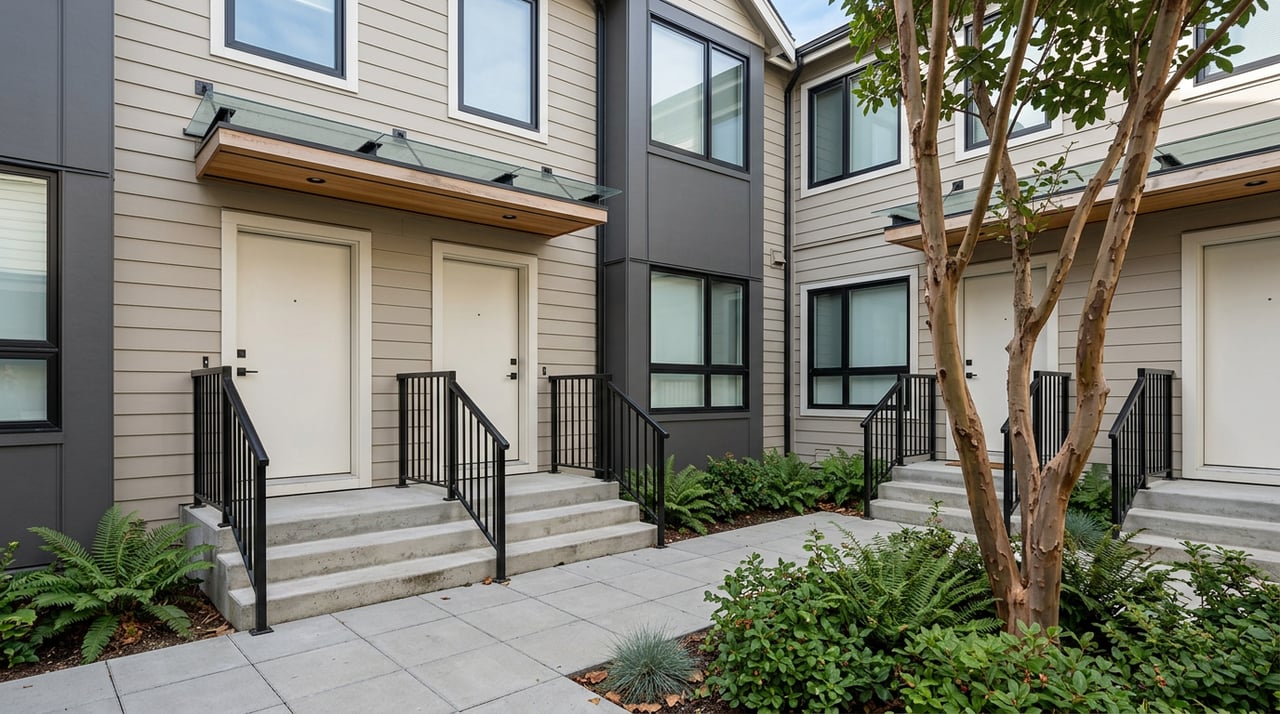
Central Campbell River Condo vs Townhome Guide
March 24, 2026
March 24, 2026
Wondering if a condo or a townhome fits you best in Central Campbell River? You are not alone. Many first-time buyers and downsizers weigh the same tradeoffs: upfront price, monthly fees, maintenance, layout, parking, and long-term resale. In this guide, you’ll see how each option performs locally, what typical costs look like, and how to match the right home type to your lifestyle and budget. Let’s dive in.
Central Campbell River sits just south of Downtown, with Discovery Passage to the east, Rockland Road to the south, and McPhedran Road to the west. The area blends single-detached homes with low-rise multi-family buildings near the Rotary Seawalk and core amenities. According to the City’s livability report, you’ll find short walks to cafés, access to transit, and a mix of older and newer buildings, along with some pockets of older infrastructure and limited sidewalks in places. For a deeper neighborhood snapshot, see the City’s Livability Assessment.
Condos typically offer single-level living, elevator access in many buildings, and shared amenities. You’ll have more neighbors nearby and shared walls, floors, and ceilings. Many buyers like the convenience and lower day-to-day upkeep inside the unit.
Townhomes often live more like a detached home. You’ll likely have a private entrance, multi-level layout, a small yard or patio, and sometimes an attached garage. You still share walls, but you’ll usually have more storage and separation from neighbors than in an apartment-style condo.
As of recent market reporting on Vancouver Island in 2025, the apartment condo benchmark hovered around the low $400s while the townhouse benchmark was in the mid $500s. Board-wide, townhomes were holding value a bit better than apartment condos at that time. Use this as context only and always check the latest Campbell River numbers before you buy.
Locally in Central Campbell River, recent sample listings (observed February 2026) show:
Monthly carrying cost depends on your strata fee and what it covers. In local examples, condos with amenities and elevators can sit around the mid $300s to $500+ per month, while some townhome complexes may be lower. For example, a central ocean-view condo sample showed about $413 per month, while an older central townhome sample showed about $327 per month. These are single examples only, but they highlight that condos are not always the cheaper monthly option once fees are included.
With both condos and most townhomes in British Columbia, you pay a monthly strata fee that helps cover common expenses such as building insurance, common-area maintenance, management, and contributions to the contingency reserve fund. Owners still carry insurance for their own unit contents and deductible exposure. For a plain-English overview, review the BC government’s guidance on strata finances and insurance.
Some townhomes are in bare-land stratas, where you may be responsible for more exterior or lot maintenance. This can change your long-term costs, risk, and insurance needs. Always confirm the strata type and what it covers in the Form B and strata plan before writing an offer.
For reduced-mobility needs, condos with elevators and single-level floor plans are often the better fit. Many townhomes are multi-level and may require modifications to suit mobility needs long term. If accessibility is a priority, focus your search on elevator buildings and units on one level.
Vancouver Island reporting in 2025 showed townhomes holding value a bit better than apartment condos at that time. That suggests ground-oriented attached homes can be more resilient in some periods. Local micro-markets still matter. Ocean-view settings, newer construction, and well-managed stratas can outperform broader averages, while outdated buildings or stratas with looming projects can lag.
These are sample snapshots observed in February 2026 to help you picture options. Always recheck current MLS data for up-to-date pricing and fees.
These examples are not market averages. Age, building condition, view, and unit upgrades all shift value. Your exact budget fit will depend on the building’s financials, upcoming projects, and how the unit shows relative to peers.
Ask the listing agent or your buyer’s agent for these items and review them carefully:
Quick livability checks for you: single-level vs multi-level, elevator access, secure parking and visitor stalls, in-suite storage, proximity to groceries and medical services, and whether building features suit current or future mobility needs.
Choose a condo if you want simple, single-level living, an elevator, and a lock-and-leave lifestyle near amenities or views. Your monthly fee could be higher, but day-to-day upkeep is often easier.
Choose a townhome if you want more privacy, a garage, and outdoor space with a home-like feel. Your upfront price may be higher than some condos, but you may gain a broader resale audience and more storage.
If your budget is tight and you want location over space, a well-managed condo can fit. If you want a balance of value, storage, and privacy, many Central Campbell River townhomes deliver.
If you would like local guidance on specific buildings, strata health, and value by street, we are here to help. Tour the right condo and townhome options, review the documents with confidence, and choose the one that fits your life today and tomorrow. Reach out to Sophie Gardner to get started.
Stay up to date on the latest real estate trends.

No matter your need, whether you are a first time home buyer, looking to sell, or a seasoned property investor, contact us to see how we can help with your goals.