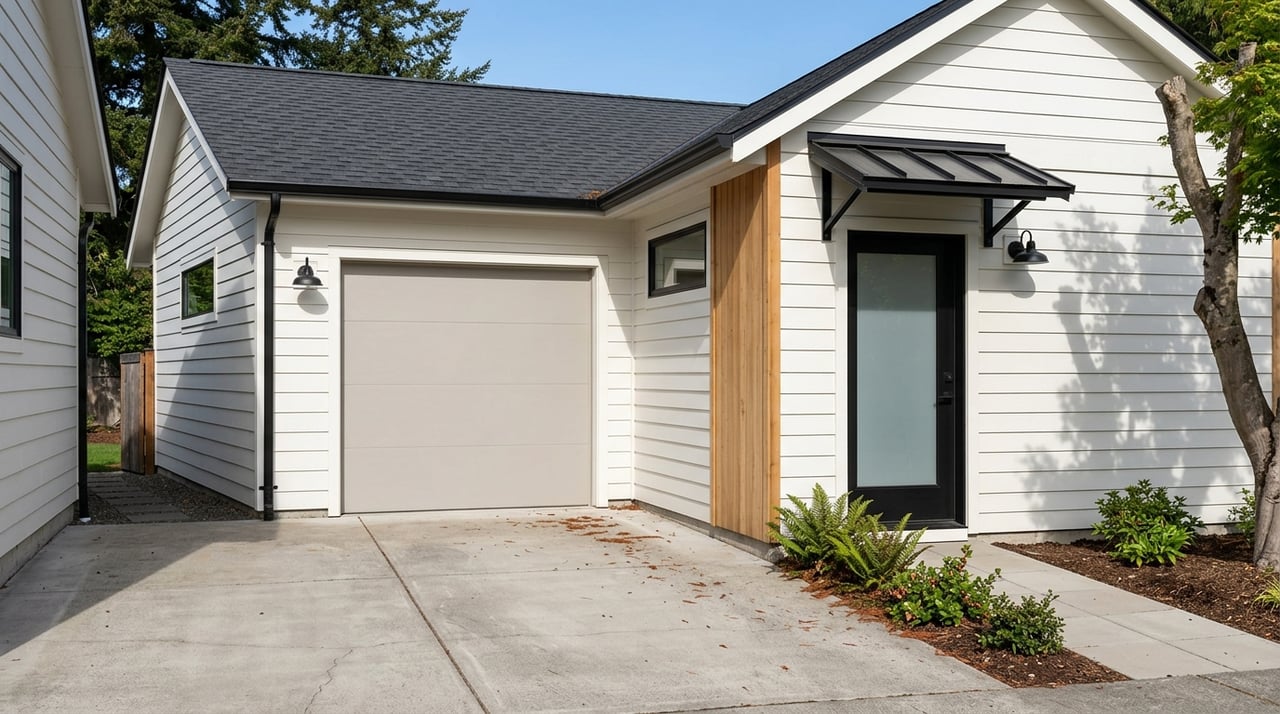
Campbellton Investment Property Analysis: What to Review
May 7, 2026
May 7, 2026
Are you looking at Campbellton and wondering whether it is a hidden opportunity or a higher-risk investment pocket? That is a smart question, especially in a market where location, zoning, and future planning can shape your returns just as much as the property itself. If you are thinking about buying an investment property in Campbellton, this guide will help you understand what stands out, what to watch closely, and where the neighbourhood may fit into your strategy. Let’s dive in.
Campbellton is one of Campbell River’s oldest neighbourhoods, with roots going back to its incorporation as a village in 1947. Today, it is a compact area of about 1.07 square kilometres with an estimated population of 887.
What makes Campbellton different is its mix of uses. City data shows the neighbourhood is about 41.5% residential, 41.9% commercial, and 15.6% industrial, with a small amount of public space as well. Compared with more residential parts of Campbell River, that gives Campbellton a more mixed-use character and a very different investment profile.
One of Campbellton’s biggest draws is relative affordability. The City’s livability report notes that property prices here are generally lower than in other neighbourhoods, with many older, smaller homes and comparatively lower-priced vacant residential or commercial parcels.
That lower pricing can create an appealing entry point if you want to get into the Campbell River market without targeting higher-priced neighbourhoods first. It can also open the door to different strategies, including long-term rentals, land holds, or future redevelopment plays, depending on the property and its zoning.
Campbellton is not a typical single-use residential neighbourhood. Its commercial core, light industrial presence, older homes, apartments, and vacant lots create a setting where some properties may offer more than one path forward.
The City’s planning documents point to the area as a place for rejuvenation while keeping its historic character and industrial identity. For investors, that matters because it suggests Campbellton is not just being viewed as a status-quo neighbourhood. It is being viewed as an area with room to evolve.
City data identifies about 40 vacant lots totaling 5.2 hectares in Campbellton. The livability report also notes that many parcels zoned commercial or industrial may be suitable for mixed-use or higher-density residential development through tools like parcel assembly, pre-zoning, or density bonusing.
In plain terms, some sites may have added value because of what they could become over time, not just what they are today. That does not mean every lot is ready for redevelopment, but it does mean Campbellton deserves a closer look if you are thinking beyond a basic buy-and-hold plan.
Campbell River’s broader rental market remains tight. According to CMHC’s October 2025 survey data, the vacancy rate in Campbell River was 2.0%, with average purpose-built apartment rent at $1,556 and median rent at $1,525.
That kind of low vacancy tends to support rental demand across the city. It does not guarantee performance for every property, but it does suggest renters are competing for limited supply.
The City has said housing affordability is a growing issue and has responded with efforts to support more housing diversity, secondary suites, social housing, and homelessness initiatives. Its interim housing-needs work from January 2025 projected a five-year need of 2,842 units and a 20-year need of 8,294 units.
At the same time, permitting averaged 326 units per year from 2021 through 2024. That gap between projected need and recent construction levels helps explain why investors keep paying attention to neighbourhoods where additional housing may be possible.
While there is no published tenant survey specific to Campbellton in the research provided, the neighbourhood’s mix offers some clues. Based on its transit access, nearby services, industrial sites, restaurants, child care, and clinics, Campbellton likely appeals to a mix of working renters, service-sector employees, industrial workers, and households looking for older or more budget-conscious housing options.
If you are evaluating a potential purchase here, it helps to think practically about that tenant mix. A well-located property with functional updates and easy access to daily services may have broader appeal than a property that relies only on cosmetic charm.
Campbellton scores well in several livability measures that matter to renters and future residents. The City reports that almost all dwellings are within 800 metres of amenities, 89% are within 400 metres of a bus stop, and 98% are within 800 metres of a municipal park.
The neighbourhood also includes 2.3 kilometres of trails, 10 kilometres of sidewalks, and 6.5 kilometres of bike routes. It is served by bus routes 1, 2, 4, 7, and 8, which adds to everyday mobility.
Amenities in Campbellton include child care, clinics, restaurants and cafés, industrial sites, and a recycling centre. For many renters, convenience and access matter just as much as the age of the housing stock.
That said, the City also flags some gaps. Basic-needs retail is limited, there are no schools in the neighbourhood, and Highway 19 and 19A cut through the area, which can affect connectivity and the feel of certain locations.
If you are considering any investment property here, zoning should be one of your first checkpoints. The City is clear that zoning determines what a property can be used for, and it recommends confirming parcel-level zoning with staff because the map is only a reference.
That is especially important in Campbellton because the neighbourhood includes residential, commercial, and industrial uses in close proximity. Two properties on nearby streets can have very different use potential and different risks.
The City says short-term rental accommodations are not permitted in Campbell River and cannot receive business licences. If you were hoping to buy in Campbellton for a short-term rental model, that is a clear stop sign.
On the other hand, secondary suites are generally allowed in several residential zones, and the 2024 zoning update introduced the Residential Infill zone, which allows three to four dwelling units per lot in many residential contexts. For some investors, those rules may create more interesting long-term opportunities than a standard single-unit rental.
Campbellton’s planning framework supports a retained mix of residential, service commercial, retail commercial, and light industrial uses. The zoning bylaw notes that Industrial One is intended for light industrial uses and compatible service commercial uses.
That means some parcels may be more attractive for income-producing commercial or mixed-use strategies than for a traditional single-family rental approach. If you are comparing Campbellton to a more straightforward residential neighbourhood, this is one of the biggest differences to understand.
Campbellton is a Special Study Area in the Official Community Plan. The City has said the neighbourhood should be rejuvenated while keeping its unique historic and industrial character, with nuisance management where industrial uses meet homes and support for innovative mixed-use residential and commercial forms in suitable corridors.
For investors, that is an important policy signal. It suggests the City sees Campbellton as a place where thoughtful change is expected, not resisted.
Campbell River entered a Housing Accelerator Fund agreement in January 2024 for up to $10.4 million to remove barriers to development and streamline housing supply. Later updates say the final phase will focus on long-term viability, including public-private partnerships for non-market housing and transit-oriented residential projects.
The city’s Official Community Plan update is also underway, with finalization scheduled for spring 2026. Since policy can influence redevelopment potential, density, and neighbourhood direction, keeping an eye on these updates is a smart move before making a major purchase.
Campbellton offers opportunity, but it is not a low-friction investment area. The same features that create upside can also create added complexity.
The City identifies several key challenges, including poor street lighting, some uncontrolled intersections, highway barriers, floodplain exposure in the northern part of the neighbourhood, and the need for parcel consolidation or rezoning to support denser redevelopment.
Because Campbellton includes industrial and commercial uses alongside housing, compatibility matters. Some buyers and renters may be comfortable with that mixed-use setting, while others may see nearby industrial or older commercial properties as a drawback.
This does not make the neighbourhood a poor investment choice. It simply means your property selection matters more. Street-by-street differences can have a real impact on tenant appeal, resale flexibility, and long-term plans.
The City says winter flows in the Campbellton sanitary sewer catchment exceed design capacity, and upgrades are planned with construction anticipated from fall 2026 through spring 2027. In the short term, that could mean disruption around some areas.
Over the longer term, though, infrastructure upgrades can support neighbourhood function and future growth. If you are investing with a multi-year horizon, that context matters.
Campbellton may be worth a closer look if you are comfortable balancing opportunity with complexity. It can make sense for buyers exploring entry-level investment properties, suite potential where zoning allows, mixed-use holdings, or redevelopment-minded purchases tied to long-term planning trends.
It may be less appealing if you want a simple, plug-and-play rental in a predominantly residential setting with fewer moving parts. In that case, another Campbell River neighbourhood may feel more predictable.
If Campbellton is on your shortlist, focus on the details that shape real performance:
A neighbourhood like Campbellton is rarely about one headline number. The best opportunities tend to come from understanding how land use, future planning, and property-level details work together.
If you want help weighing Campbellton against your budget and goals, local guidance can save you time and help you avoid expensive assumptions. Connect with Sophie Gardner for a clear, local perspective on Campbellton investment properties and the broader Campbell River market.
Stay up to date on the latest real estate trends.


No matter your need, whether you are a first time home buyer, looking to sell, or a seasoned property investor, contact us to see how we can help with your goals.