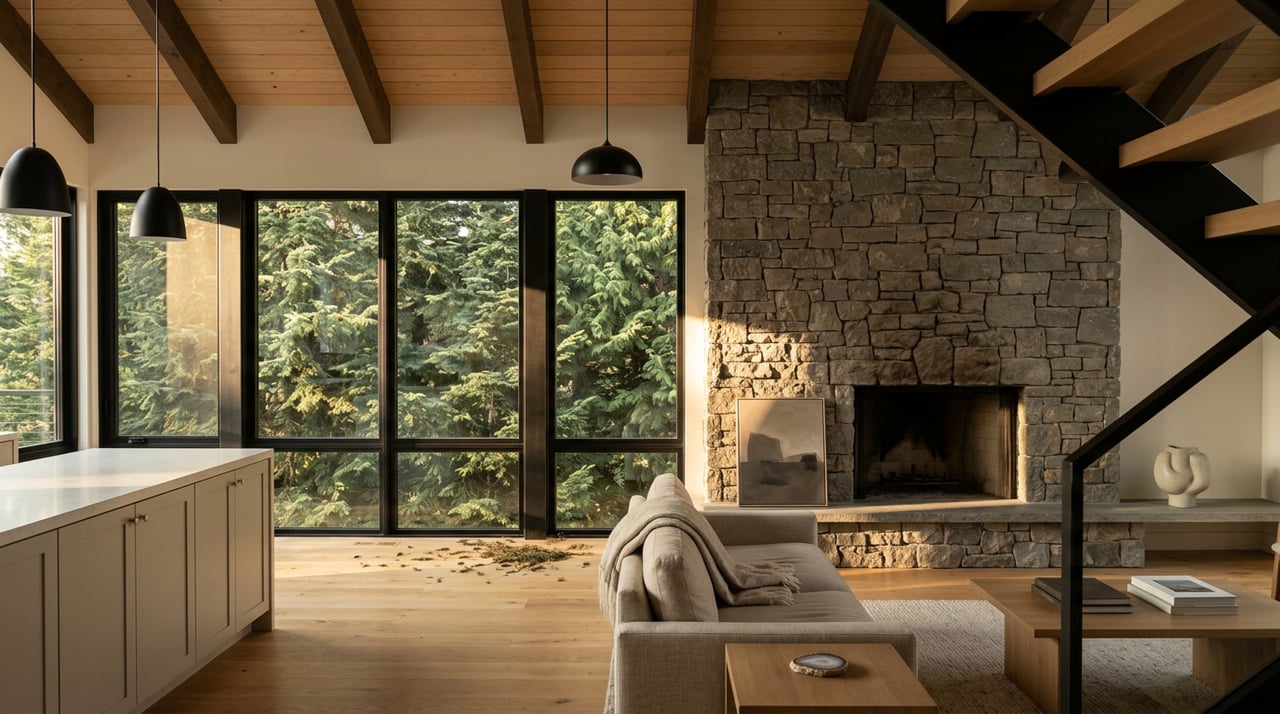
The One Word on a Mount Washington Listing That Changes Everything Else
September 24, 2026
September 24, 2026
Scroll through active listings on Mount Washington long enough and you'll find two condos that look like the same purchase. Same building footprint, same distance to the Hawk Chair, same propane fireplace and ski locker in the hallway. Then you open the second listing and near the bottom, past the square footage and the mountain view, sits a line that quietly rewrites the whole deal: this unit is leasehold, and traditional financing isn't available.
One recent Mount Washington building lot listing put it almost that bluntly, noting that "traditional financing is not available for this leasehold lot" and that a buyer would need alternative financing instead. That's not fine print. That's the actual price of admission, and it has nothing to do with the view.
Mount Washington's condo stock includes buildings like Ptarmigan Ridge, Paradise Ridge, and Creekside House, and the fee structures inside them tell you more than the marketing photos do. A recent freehold unit in Creekside House carried strata fees around $723 a month with property taxes near $2,150 a year. A leasehold unit in Ptarmigan Ridge, by contrast, listed strata fees closer to $360.60 a month.
That gap isn't random. Leasehold buildings on the mountain tend to run leaner strata budgets because the underlying land isn't part of what the strata corporation owns and insures. Freehold buildings carry the full weight of land and structure together, which shows up every month on the fee line.
Here's the part that surprises buyers who assume tenure is baked into a building's identity: it isn't. Ptarmigan Ridge has carried listings for units described as leasehold and, separately, a top-floor unit marketed as a freehold penthouse suite. Same building name, different legal footing depending on which specific strata lot you're buying. The building's reputation tells you about the ski access and the pet policy. It tells you nothing about who owns the ground under your unit.
That distinction traces back to how the mountain got built in the first place. Mount Washington Alpine Resort broke ground in 1977 after its founders spent more than a year acquiring the land from Crown Zellerbach, a forestry company, and the resort opened in 1979. Decades of subsequent development happened on a mix of tenures, which is why a buyer today can't assume anything from a building's name or its age. The only way to know what you're actually buying is to check the specific strata lot's title, not the building's brand.
A leasehold purchase and a freehold purchase aren't the same transaction wearing different price tags. They're different products from a lender's point of view. British Columbia's own guidance on leasehold properties is direct about this: traditional lenders are often reluctant to finance leasehold homes, and buyers who do find financing often pay a premium for it through alternative lenders.
This matters more at Mount Washington than in a typical subdivision, because so much of the mountain's condo inventory sits on leased land. A buyer who falls for a leasehold unit's lower price per square foot and assumes their existing mortgage pre-approval will cover it can find out at the financing stage that the math doesn't transfer. The unit isn't cheaper because it's a better deal. It's cheaper partly because fewer lenders will touch it, which is a cost that shows up later instead of upfront.
There's a reassuring detail buried in the same BC guidance, though. Leasehold condos on strata land, which describes most of Mount Washington's leasehold buildings, are still governed by the Strata Property Act. Owners still vote at annual general meetings, still sit on strata councils, and still have access to the Civil Resolution Tribunal if a dispute with the strata corporation goes sideways. That's a meaningfully different situation from a bare long-term residential lease with no strata protections at all. Leasehold at Mount Washington means limited financing options, not limited ownership rights.
Here's a pattern that shows up across current Mount Washington listings and gets misread constantly: leasehold units tend to say "no GST," while freehold units, especially newer construction, tend to say GST is owed.
It's tempting to conclude that leasehold ownership itself is what exempts a buyer from GST. It doesn't. GST applies to the sale of new or substantially renovated residential property. It doesn't apply to the resale of a used home, regardless of whether that home sits on leased or owned land. The pattern in current listings likely reflects which units happen to be resales versus which happen to be new construction, not some blanket rule tied to tenure.
The practical takeaway: don't let a "no GST" tag talk you into assuming a unit's tax treatment before you've confirmed it. Ask directly whether the specific unit you're considering is a resale or a first sale from the developer, and get the GST answer in writing before you remove financing conditions.
At last check, roughly seventeen homes sat active across Mount Washington, priced anywhere from about $210,000 up to $2 million, with a median list price near $499,000. That's an unusually wide spread for a single mountain community, and tenure is a big part of why.
A $210,000 leasehold studio and a $2 million freehold chalet aren't just different sizes. They're different financial products with different lender pools, different monthly carrying costs once you add strata fees and land rent together, and different resale ceilings when it's time to sell. Comparing them on price per square foot alone misses the mechanism doing most of the work.
Sky Island, a newer community planned adjacent to the Alpine Village near the base area off Strathcona Parkway, is organized around seven separate strata corporations rather than one large complex, with building lots expected to become available. That structure is different from the single-strata model that defines buildings like Ptarmigan Ridge or Paradise Ridge, and it's worth watching as more of Sky Island's lots come to market, simply because it means buyers will be evaluating seven distinct sets of strata rules and finances instead of one.
Before you weigh two Mount Washington listings against each other on price alone, confirm a few things in this order:
None of this makes leasehold a bad option. Plenty of owners on the mountain are happy with lower fees and a lower entry price. It just means the two listings you're comparing might not be comparable at all until you've checked the one line that actually separates them.
Does a lower price on a leasehold unit automatically mean it's the better deal? Not on its own. A lower price can reflect a smaller unit, a resale discount, or the financing friction that comes with leasehold land. Compare total monthly cost and financing terms, not just the listing price.
Can I get a normal mortgage for a leasehold condo on Mount Washington? Some lenders will finance leasehold strata units, but the pool is smaller than for freehold, and terms can differ. Confirm financing specifics for the exact unit before you write an offer.
Does leasehold mean I have less say in how the building is run? No. Leasehold strata units on Mount Washington still fall under BC's Strata Property Act, which means owners still vote at annual meetings and still have access to dispute resolution through the Civil Resolution Tribunal, the same as freehold strata owners.
If you're weighing a purchase on the mountain, or trying to figure out what a specific building's tenure actually means for your financing and your future resale, the Mount Washington neighborhood guide from the Sophie Gardner Home Team is a good place to start, and a conversation with our team before you make an offer is a better one. Get your free home valuation and let's talk through what a specific listing's fine print actually means for your bottom line.
Stay up to date on the latest real estate trends.
No matter your need, whether you are a first time home buyer, looking to sell, or a seasoned property investor, contact us to see how we can help with your goals.